
It’s been a busy week at the Wild Library! We found this sick hedgehog in the road outside our house late one afternoon.

How do you know when a hedgehog needs help?
We observed it for a while. It was out during the day, which is unusual. It was also very shaky and lethargic, and struggling to walk. We took it inside and contacted @hedgehog_rescue_dublin.
We gave him some cat food and a saucer of water with a pinch of salt and sugar. Although he was weak and tired, he tucked into the cat food straight away. Many people are tempted to feed hedgehogs bread soaked in milk but this can cause stomach issues even though they might eat it! Here is some advice from the hedgehog rescue:
“Initially, we ask you watch the hedgehog to see what it does for a short time. Please do not pick up a healthy-looking hedgehog unless you have concerns. If you are still concerned about the hedgehog, pick it up (wearing gardening, or thick, gloves), put it in a high-sided cardboard box/cat carrier/hamster cage. Line the box with an old towel/fleece at the bottom for it to hide in and keep warm (or plenty of newspaper if you have nothing else). Put down more water and cat/dog food and put the hedgehog somewhere quiet, dark & warm. Please keep away from children and domestic animals.”

Hedgehog facts
- Hedgehogs are a non-native but naturalised species in Ireland.
- The Irish name for hedgehog is An Gráinneog. It means ‘little ugly one’.
- Hedgehogs are nocturnal. It’s unusual to see a healthy hedgehog out during the day unless its nest was disturbed.
- Hedgehogs eat worms, insects, caterpillars, millipedes, and slugs. They’ll also eat frogs, lizards, and eggs given the chance. They’re partial to pet food if found in the garden.
- Females give birth to 4-6 hoglets.
- During hibernation, a hedgehog’s heart rate slows from 200 bpm to only 5 bpm!
- Hedgehogs cover surprisingly long distances while foraging for food. Sometimes, up to 3km in a single night.
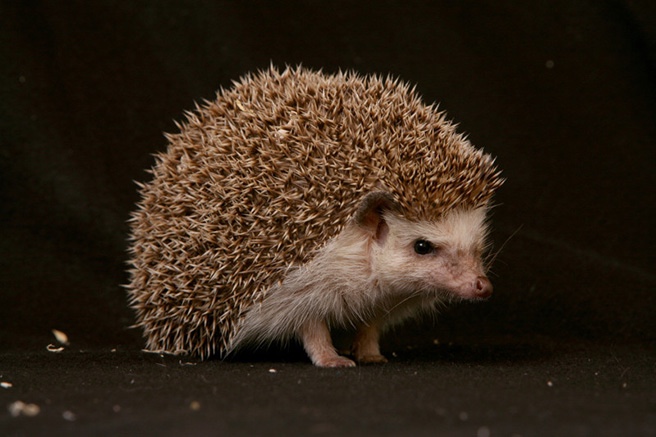
Atelerix frontalis, one of the species found in South Africa, shares many traits with its Irish cousins in terms of preferred habitat and diet. Hedgehogs found in regions with extreme heat might aestivate. This is like hibernation as it lowers the hedgehog’s metabolic rate to protect it from heat but the hedgehog won’t sleep as long or as deeply as when hibernating.
There’s so much we don’t know about these spiky insectivores. Some recent studies looked at the structure of hedgehog spines and had some interesting results:
A cross section of a hedgehog spine showed it structurally looked like a citrus fruit cut in half with support segments and hollow areas. This most likely contributes to the strength-to-weight ratio of the spines. In other words, the spines are strong enough to act as an effective defense mechanism but are light enough for the hedgehog to remain mobile and nimble!

To wrap up the week, Leia caught a baby wren and brought it into the house. Which meant I had to catch a baby wren… Luckily, the wren was unharmed and flew into the bushes. Leia was a little put-out but soon recovered after a long afternoon nap. After all the excitement, I needed a strong cup of tea (and a new bell for Leia’s collar!).
Thank you for visiting the Wild Library blog. You might also enjoy reading about the life-changing love only a dog can give: 10 Questions: How a Dog’s Love Changed your Life – Candice’s Story
Sources
https://www.irishhedgehogsurvey.com/about-hedgehogs
https://www.irishexaminer.com/lifestyle/outdoors/arid-40877345.html
http://hedgehogrescuedublin.com/?page_id=19http://hedgehogrescuedublin.com/?page_id=19
https://www.awf.org/blog/cute-tough-african-hedgehog
https://www.bbc.com/news/uk-england-nottinghamshire-65417389


 Wild Library